 Oct 23, 2026 9:00 AM
Maintaining Bract Quality While Finishing Poinsettias
PROBLEM: The period between first color and market finish is often when poinsettia quality is won or lost. As bracts expand and develop color, plants become more sensitive to environmental stress, nutrient imbalances, disease pressure and chemical applications. Many issues that seem unrelated, including Botrytis, bract-edge burn, phytotoxicity and poor post-harvest performance, can often be traced back to conditions during this final stage of production.
JOSH’S TIP(S): Understanding why poinsettias behave differently during bract expansion can help you avoid problems and maintain crop quality through shipping. Here are three tips to consider and share with your team:
Tip 1: Keep Bracts Dry and Disease-Free
Use drip or sub-irrigation and water early to keep foliage dry.
Provide sufficient airflow and spacing throughout the crop to keep bracts dry and reduce fungal disease risk. Avoid condensation on bracts—especially overnight—by monitoring the dew point. Be cautious of lowering temperatures, which can increase humidity and condensation risk.
Clean senesced leaves and plant debris that can harbor Botrytis.
Tip 2: Support Healthy Bract Development
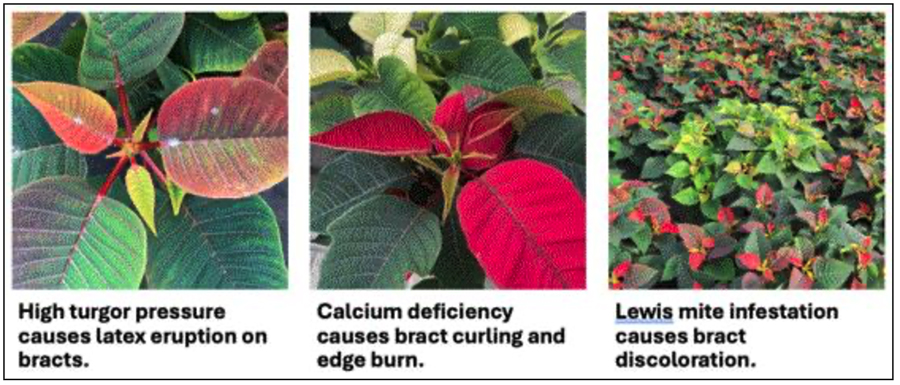
Avoid significant swings in temperature, humidity and substrate moisture to reduce physiological stress. High humidity combined with wet substrate causes unsightly latex eruption or “crud” on the bracts.
Maintain fertility within your target range and avoid excessive soluble salts. Watch susceptible cultivars closely for bract edge burn. Use a Cal-Mag fertilizer and supplement with foliar calcium chloride sprays of 200–400 ppm Ca.
Tip 3: Protect Bract Quality
Lewis mites, thrips and whiteflies can reduce bract quality and marketability, so monitoring and prevention is key. Pest injury may be mistaken for nutrient deficiencies or normal color development issues. Many pesticide labels include specific application restrictions once bracts have formed! Trial unfamiliar products or tank mixes on a small group of plants before making widespread application.
Remember that cosmetic damage, whether caused by pests or chemicals, is unlikely to be outgrown at this stage.